
What I offer
Therapy shaped around your family member
Every individual communicates differently. My services are designed to meet your family member exactly where they are and build on their current strengths.
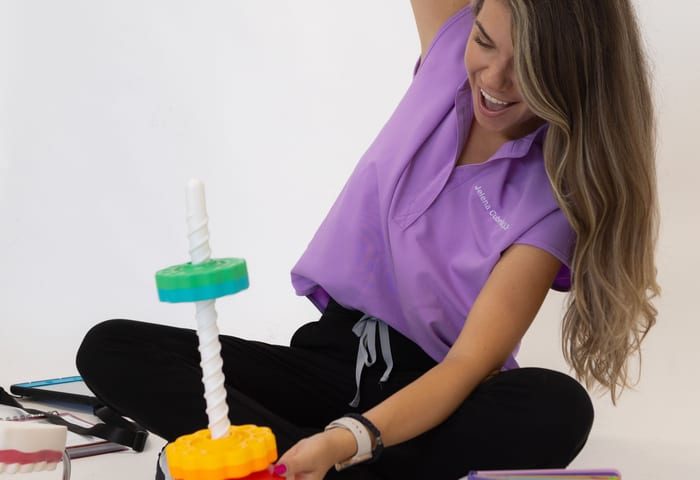
Late Talkers
A late talker is a toddler (between 18 - 30 months) who is talking less than expected for their age, but may otherwise be developing age appropriately in areas such as understanding of language, play skills, social skills, and motor skills (Hanen, 2011). An SLP can help parents understand their child's communication development and build language through everyday activities like play, books, meals, and routines. As a parent, you may find yourself saying: “My child understands a lot but isn’t using many words yet.”
What to expect
- Comprehensive language and communication assessment
- Play-based vocabulary and language building
- Parent coaching to support language at home
- Strategies woven into everyday routines
- Guidance on what progress looks like and what to watch for
- Regular progress check-ins and goal updates

Articulation
Articulation refers to how we use our various articulators (i.e., mouth, jaw, lips, tongue, teeth, etc) to produce speech sounds (i.e., s, k, l, m, etc). A child may have difficulties with producing speech sounds correctly. For example, a child might say “wun” for run. A child also may demonstrate patterns of speech sound errors such as consistently leaving out or replacing certain speech sounds. An SLP can help teach accurate positioning and coordination of articulators to produce speech sounds. As a parent, you may find yourself saying: “My child’s speech is difficult to understand.”
What to expect
- Sound-by-sound assessment
- Targeted sound production practice
- Support for patterns of speech sound errors
- Fun games and activities to reinforce learning
- Family education on how to support practice at home
- Progress monitoring and goal adjustments over time

Motor Speech
Motor speech is about the planning and movement needed to produce speech. Some children know exactly what they want to say but have difficulty getting their lips, tongue, jaw, or other speech muscles to work together smoothly. This can affect how clearly and consistently they speak. As a parent, you may find yourself saying: “My child knows what they want to say, but their brain and mouth are having trouble working together to say it.”
What to expect
- Assessment of speech motor planning and coordination
- Evidence-based motor speech intervention
- Repetition-based practice to build motor patterns
- Strategies to support consistency and clarity of speech
- Family education on how to support practice at home
- Collaboration with other professionals when appropriate
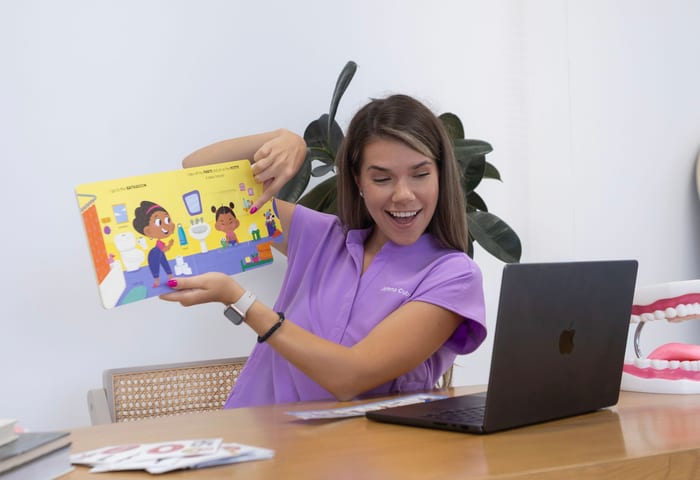
Language Support
Language involves both receptive language; our ability to understand what others communicate, and expressive language; our ability to communicate our own thoughts, ideas, wants, and needs. A child with receptive language difficulties may have trouble understanding directions, questions, vocabulary, or conversations, while a child with expressive language difficulties may have difficulty using words, combining words into sentences, finding the words they want to use, or sharing their ideas. An SLP can assess a child’s individual communication strengths and needs and provide support to develop understanding and expression through strategies that are meaningful and appropriate for the child.
What to expect
- Assessment of receptive and expressive language skills
- Vocabulary, sentence development, and comprehension support
- Storytelling and narrative skills
- Strategies for following directions and answering questions
- Use of gestures, visuals, or AAC when helpful
- Collaboration with teachers and school teams when needed
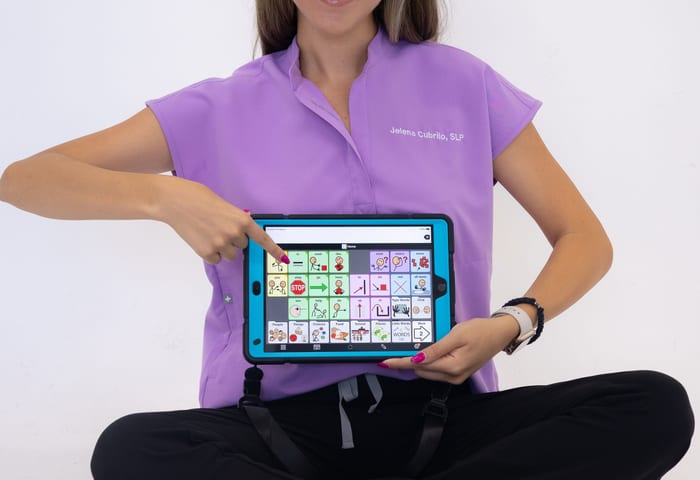
Augmentative and Alternative Communication (AAC)
AAC stands for augmentative and alternative communication. AAC can augment spoken communication or provide an alternative to speech. AAC can include communication boards, picture symbols, speech generating devices, and communication apps (e.g., Proloquo2Go, TouchChat, and TDSnap). AAC provides a way for an individual to express their wants, thoughts, feelings, and ideas in a way that works for them. An SLP can help identify and program the AAC option that will best support an individual’s communication, as well as teach them, their family, and any communication partner how to use the system effectively. As a family member, you may find yourself asking: “What tools help my loved one communicate when talking is difficult?”
What to expect
- AAC assessment to identify the best fit for your child
- Programming and customization of the AAC system
- Teaching your family member how to use their AAC effectively
- Training for family members and communication partners
- Ongoing support as communication needs grow and change
- Collaboration with school teams and other professionals
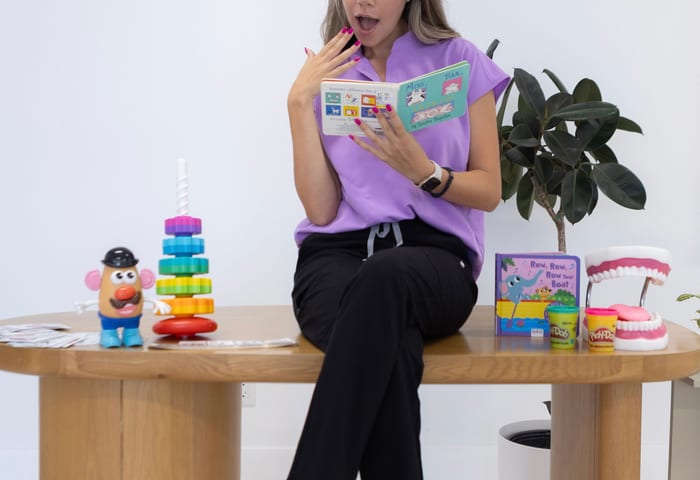
Social Communication
Social communication is about using communication to connect and interact with other people. This can include learning to start and maintain conversations, take turns when talking, stay on topic, understand facial expressions, body language, and tone of voice, ask and answer questions, understand jokes, sarcasm, or implied meanings, as well as adjust communication depending on the situation. Social communication skills can look different from person to person, and support should focus on helping the individual connect with others in ways that are comfortable and meaningful for them. As a family member, you may find yourself saying: “How does my family member use communication to connect, interact, and participate with other people?”
What to expect
- Assessment of social communication strengths and needs
- Support for conversation skills and turn-taking
- Understanding facial expressions, body language, and tone
- Strategies for adjusting communication across situations
- Neurodiversity-affirming, client-centred approach
- Family coaching and collaboration with school teams
How it works
From first call to first session
Free consultation call
We start with a relaxed 15-minute phone call. You tell me about your child, your concerns, and your goals. No pressure, just a real conversation.
Comprehensive assessment
We meet your child in a warm, play-based setting. I assess their communication skills and create a clear picture of their strengths and areas to grow.
Personalized therapy plan
Clear therapy goals designed specifically for your child. We set goals together and discuss what success looks like.
Ongoing therapy & support
Weekly or bi-weekly sessions, with regular progress updates. You're always in the loop and always welcome to ask questions.
Not sure which service fits your child?
That's completely okay. Book a free consultation and we'll figure it out together.
Book a Free ConsultationDon't see what your family member needs?
My practice focuses on a specific set of communication areas within certain age ranges. I want every family to find the right support even if that's not with me. If your family members needs fall outside what I offer, I'm happy to point you toward the right professionals and services in your community.
Get in touchSources & further reading
The information on this page draws from evidence-based clinical resources. These links are also a great starting point.